Stakeholder Consultations on Marine Litter Actions in Pakistan
Plastic Free Rivers and Seas for South Asia (PLEASE) Project Implementation Unit
Project Overview
The Assessment of Marine Litter in Pakistan is a comprehensive initiative aimed at understanding and addressing plastic pollution across riverine and marine ecosystems. Implemented under the PLEASE Project, the study adopts a river-to-see approach, recognizing the direct link between inland waste mismanagement and marine pollution.
By combining scientific analysis, community engagement, and policy evaluation, the project provides a holistic understanding of plastic leakage pathways, impacts, and solutions to support sustainable marine and coastal management in Pakistan.
Project Objectives
- Assess existing institutional, regulatory, and policy frameworks for marine litter management in Pakistan.
- Identify gaps, challenges, and opportunities to improve current systems and practices.
- Develop actionable recommendations to strengthen national marine litter management efforts.
- Engage key stakeholders, including government, communities, academia, and private sector.
- Ensure gender-responsive and participatory consultation processes.
- Contribute to regional marine litter initiatives led by the South Asia Cooperative Environment Programme (SACEP).
Key Components
The project includes a detailed assessment of existing marine litter management frameworks, identifying key gaps in governance, enforcement, and coordination. It engages stakeholders including government agencies, local communities, academia, and the private sector to understand on-ground challenges and opportunities.
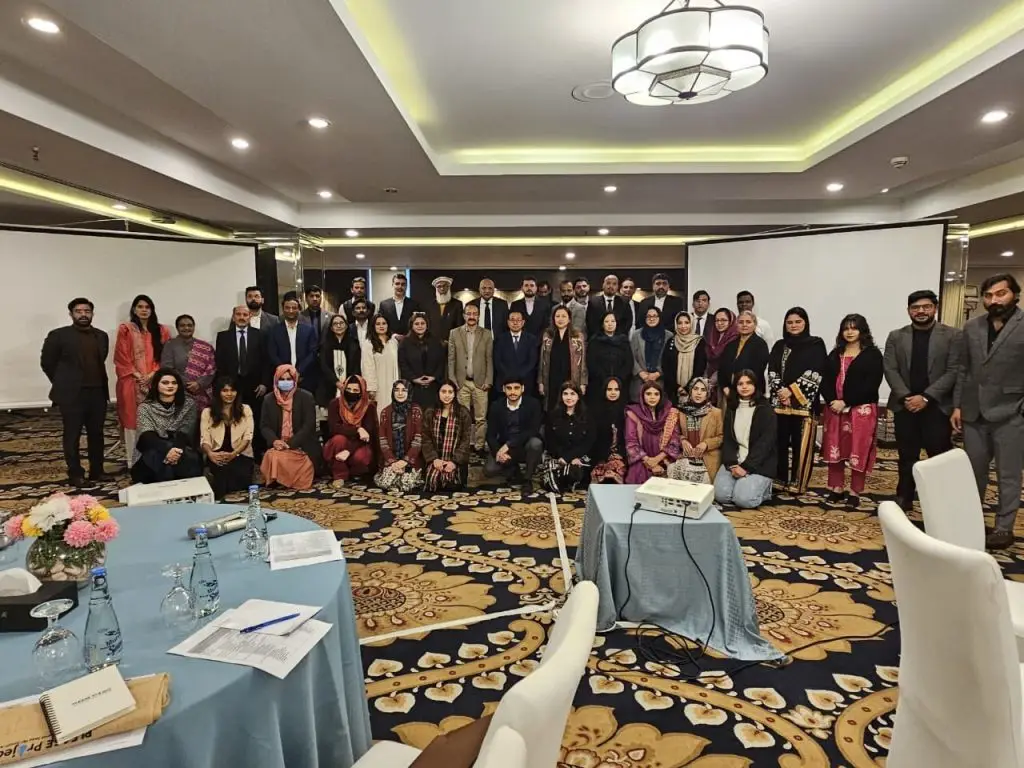
Field-based consultations in Karachi and Lahore highlight major plastic leakage pathways through rivers, drains, and coastal zones, while also capturing socio-economic impacts on communities, particularly those dependent on fisheries and coastal livelihoods. The initiative emphasizes gender-responsive and inclusive participation, ensuring representation of vulnerable and coastal populations.
Additionally, the project develops actionable, evidence-based recommendations and produces comprehensive documentation to support national policy frameworks and contribute to regional knowledge-sharing platforms.
Approach & Methodology
A multi-level, evidence-based approach is adopted, integrating policy review, field assessments, stakeholder consultations, and data analysis. The methodology aligns local insights with national and regional frameworks, ensuring that recommendations are practical, inclusive, and policy-relevant.
The project prioritizes a river-to-sea perspective, linking upstream waste generation with downstream marine impacts, and incorporates continuous stakeholder engagement to strengthen ownership and implementation.
Project Gallery